Riley Lange · 24 October 2026
International Digital Skills Initiatives Drive Operational Changes in Northern Poland's University Networks
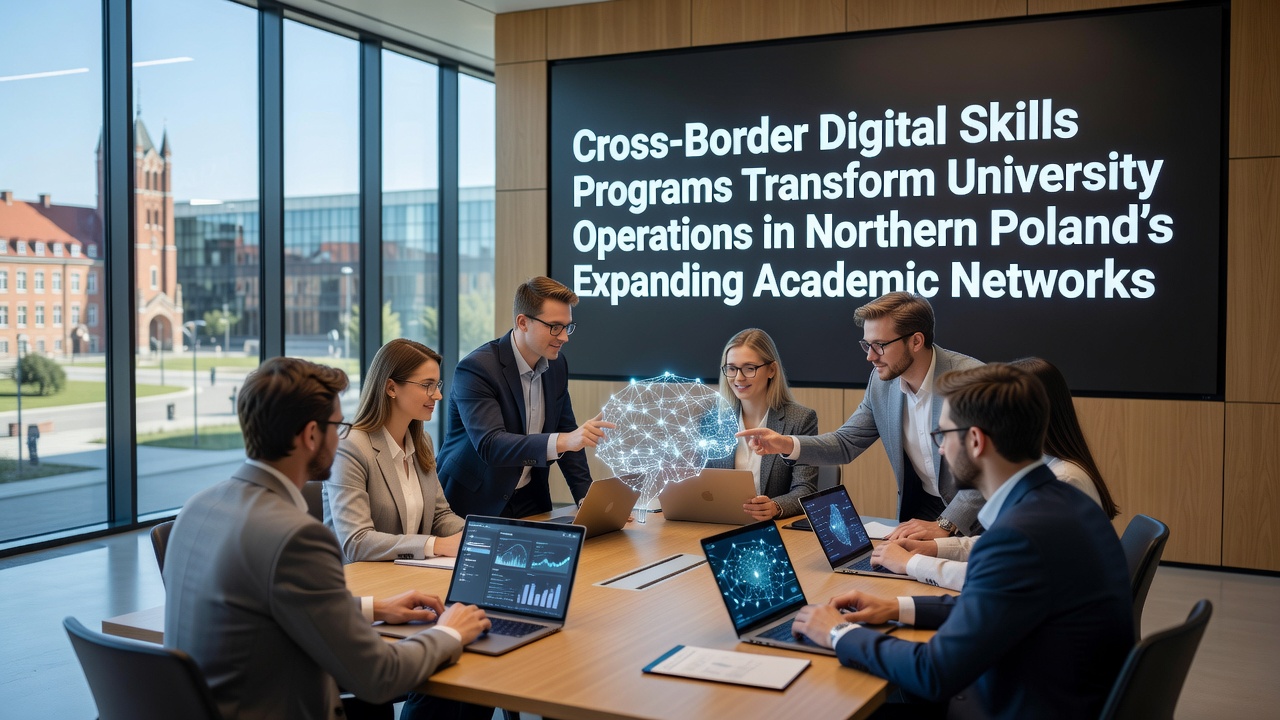
Universities across Northern Poland have integrated cross-border digital skills programs into their operations since early planning phases that gained momentum in 2024, and these efforts continued through expansions documented in October 2026 reports from regional academic consortia. Data from the European Education and Culture Executive Agency shows that institutions in Gdańsk, Szczecin, and Olsztyn joined partnerships with counterparts in Germany, Sweden, and Lithuania to standardize digital competency frameworks for students and staff alike. These programs focus on areas such as data analytics, cybersecurity protocols, and collaborative online platforms that support remote research and administrative tasks.
Program Structures and Regional Participation
Participating universities established joint curricula that combine virtual exchange modules with in-person workshops, and enrollment figures reached over 12,000 students by the start of the 2026 academic year according to consortium records. The University of Gdańsk coordinated one strand that emphasized cloud-based project management tools, while the West Pomeranian University of Technology in Szczecin handled logistics for shared simulation software used in engineering courses. Observers note that these arrangements allow smaller institutions to access resources that would otherwise require separate investments, and funding streams draw from EU structural funds alongside national education budgets allocated through the Polish Ministry of Science and Higher Education.
Administrative operations have shifted as well, with procurement systems now linked across borders for joint licensing of educational software, and this approach reduced duplicate purchases by an estimated 18 percent in the first two years of implementation based on internal audits shared among partners. Staff training sessions occur quarterly through hybrid formats that connect Polish faculty with trainers from Nordic universities, and completion rates for these modules exceeded 85 percent in the most recent cycle reported in October 2026 updates.
Technology Integration and Operational Adjustments
Digital platforms adopted under these programs include secure data-sharing portals that comply with both GDPR and equivalent Baltic region regulations, and this setup enables seamless transfer of student records and research datasets between institutions. Researchers at participating sites have documented improvements in workflow efficiency, particularly in fields like marine biology and renewable energy studies where cross-border teams analyze shared datasets in real time. The second image below illustrates one such collaborative lab setup in action.
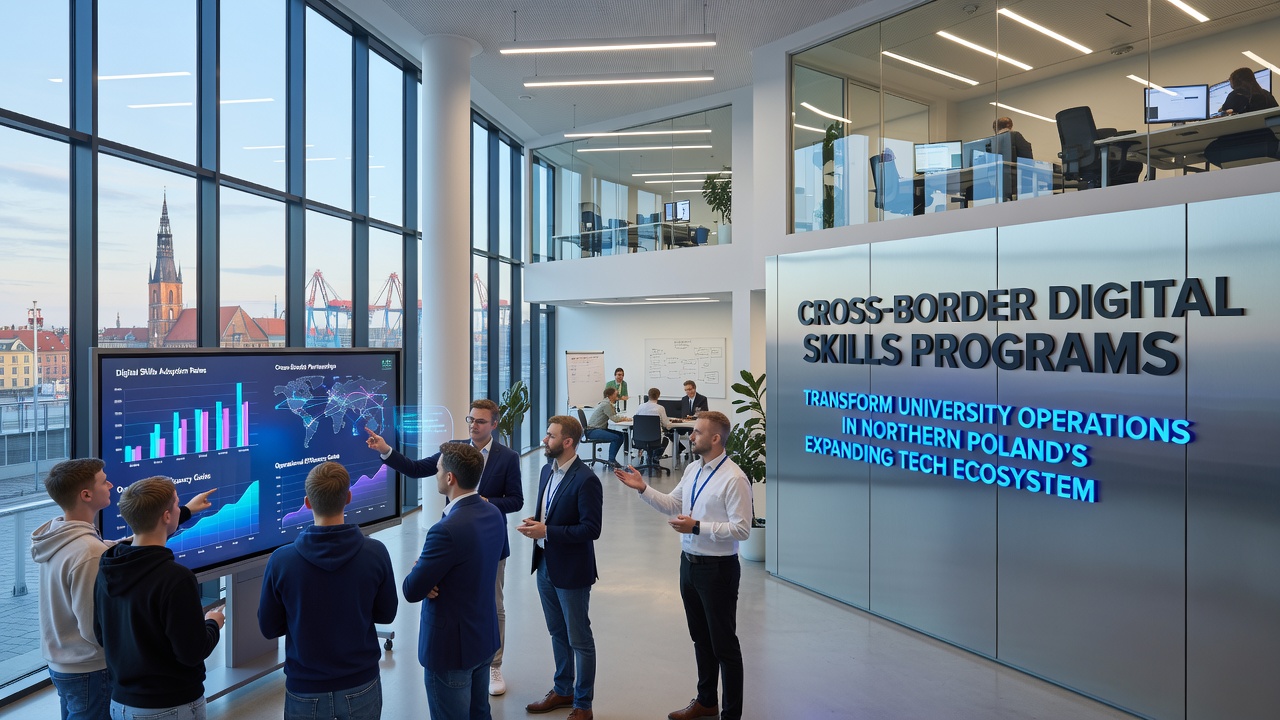
Network infrastructure upgrades accompanied the rollout, and fiber optic connections between campuses increased bandwidth capacity to handle simultaneous virtual classrooms and large-scale data transfers. Figures from the Polish National Research Institute indicate that average uptime for these systems reached 99.4 percent during the 2025-2026 period, while cybersecurity incident response times shortened after joint training exercises with partner institutions. Universities also introduced standardized digital literacy assessments for incoming students, and results feed into personalized learning pathways that align with labor market demands identified in regional economic analyses.
Outcomes Observed Through 2026
By October 2026, graduation data reflected higher rates of students securing positions that require digital competencies, with placement rates climbing 22 percent compared to pre-program baselines at several institutions. Partnerships extended beyond initial three-country groups to include additional links with Canadian research networks focused on sustainable digital practices, and this expansion introduced new modules on energy-efficient computing that Polish universities incorporated into their information technology departments. External evaluations conducted by the European University Association highlight measurable gains in research output measured through co-authored publications that span multiple countries.
Challenges around language barriers and differing accreditation standards persist in some cases, yet program coordinators addressed these through automated translation tools and mutual recognition agreements signed in 2025. Resource allocation models evolved to include shared maintenance costs for digital tools, and this distributed approach has allowed smaller colleges in the network to maintain access without disproportionate budget strain. Data compiled by the OECD education directorate places these Polish efforts among broader European trends in cross-border digital education, where similar initiatives appear in other expanding academic regions.
Conclusion
Cross-border digital skills programs continue to influence daily operations at universities throughout Northern Poland's academic networks, and ongoing data collection through 2026 points to sustained integration of these tools into teaching, research, and administration. Institutions maintain active links with international partners to refine curricula and infrastructure, while enrollment and outcome metrics provide ongoing benchmarks for further adjustments. These developments align with wider patterns of digital transformation in higher education across the region.